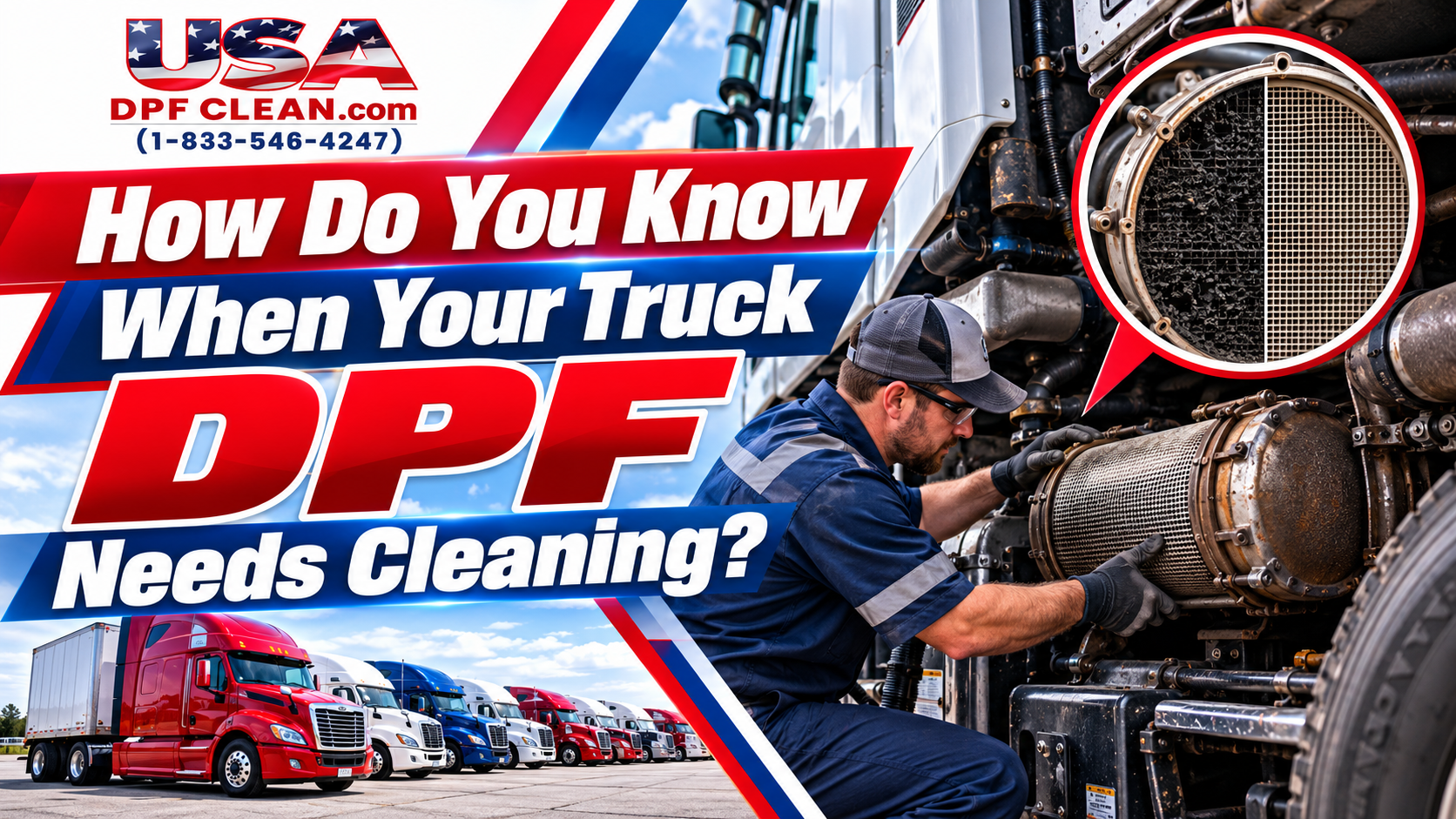
How Do You Know When Your Truck DPF Needs Cleaning?
How Do You Know When Your Truck DPF Needs Cleaning?
Diesel trucks are built to handle demanding workloads, long-distance transportation, and challenging operating conditions. However, keeping a diesel engine running efficiently requires more than routine oil changes and general maintenance. The diesel particulate filter (DPF) is an important component of the exhaust aftertreatment system, and when it becomes restricted, it can affect engine performance, fuel economy, and vehicle reliability.
Recognizing when your truck needs DPF cleaning can help you address developing problems before they lead to more serious downtime or costly repairs. Warning signs may include dashboard alerts, reduced engine power, increased fuel consumption, and frequent regeneration cycles.
For truck owners, owner-operators, and fleet managers, understanding these symptoms is an important part of maintaining diesel vehicles. USA DPF Clean helps bring attention to the importance of proper DPF maintenance and timely service so diesel operators can make informed decisions about their trucks.
What Is a Diesel Particulate Filter (DPF)?
A diesel particulate filter is part of a diesel engine's exhaust aftertreatment system. Its primary function is to capture soot and other particulate matter from diesel exhaust before those particles are released into the atmosphere.
As soot accumulates inside the filter, the truck's system uses a process called regeneration to burn off much of the trapped soot. Regeneration can occur automatically under suitable operating conditions, or it may require driver involvement or a service procedure, depending on the truck and the circumstances.
However, regeneration does not remove every type of deposit. Noncombustible ash can accumulate over time, and other problems, including damaged filter components or underlying engine issues, may interfere with normal operation.
This is why regular monitoring and appropriate diesel DPF service matter. Understanding how the system works can help drivers recognize warning signs and seek professional assessment when necessary.
7 Signs Your Truck DPF Needs Cleaning
Several symptoms may indicate that your diesel particulate filter needs attention. Although these signs can point to a restricted DPF, they may also have other causes. Proper diagnosis is essential before deciding whether cleaning, repair, or another maintenance procedure is required.
1. The DPF Warning Light Turns On
One of the most recognizable signs is a DPF warning light or an exhaust aftertreatment message on the dashboard.
This alert may indicate that soot accumulation has reached a level requiring regeneration or other attention. The exact meaning depends on the truck's make, model, engine, and warning-message configuration.
If the warning appears, consult the manufacturer's operating instructions and follow the recommended procedure. Some trucks may allow a normal or parked regeneration under specified conditions, while others may require professional service.
Do not ignore repeated warnings or assume every DPF alert means the filter needs cleaning. If the warning persists, returns frequently, or appears alongside other fault messages, have the system diagnosed.
2. Reduced Engine Power
A noticeable loss of power can be another indication of a potential DPF problem. When exhaust restriction becomes excessive, the engine control system may limit performance to protect the engine or aftertreatment components.
Drivers may notice slower acceleration, reduced pulling power, or difficulty maintaining speed under load.
These clogged DPF symptoms can be particularly disruptive for commercial truck operators who depend on consistent performance during deliveries or long-haul trips.
However, reduced power can also result from turbocharger issues, fuel-system problems, sensor faults, or other engine-related conditions. A diagnostic inspection can help determine whether the DPF is responsible.
3. Increased Fuel Consumption
If your truck begins using more fuel than usual without a clear change in workload or driving conditions, the exhaust aftertreatment system may be worth checking.
Frequent regeneration can increase fuel consumption because the engine uses additional fuel to raise exhaust temperatures and burn accumulated soot. Repeated unsuccessful regeneration attempts may also contribute to inefficient operation.
Other factors, such as tire pressure, vehicle load, driving habits, injector performance, and engine condition, can also affect fuel economy.
Tracking fuel consumption over time can help identify unusual changes. If higher fuel use occurs alongside DPF warnings or reduced performance, arrange an inspection to determine the underlying cause.
4. Frequent or Unsuccessful Regeneration
Regeneration is a normal process that helps remove accumulated soot from the DPF. Under suitable conditions, the system raises the filter temperature so that trapped soot can burn off.
Problems may arise when regeneration occurs unusually frequently, repeatedly fails to complete, or cannot take place because the required operating conditions are not met.
Frequent short trips, extended idling, low exhaust temperatures, faulty sensors, and certain engine problems can contribute to regeneration difficulties.
If your truck repeatedly requests regeneration, avoid repeatedly forcing the process without understanding the cause. Follow the manufacturer's instructions and seek professional DPF cleaning service or diagnostic support when recommended.
5. Higher Exhaust Backpressure
A restricted DPF can increase exhaust backpressure, making it harder for exhaust gases to pass through the filter.
Depending on the vehicle, the engine control system may monitor pressure differences across the filter using dedicated sensors. Diagnostic trouble codes or abnormal sensor readings can help technicians identify a possible restriction.
Excessive backpressure may be associated with reduced engine performance and additional strain on the exhaust system.
Because pressure readings can also be affected by faulty sensors, blocked pressure lines, or wiring problems, a technician should evaluate the readings alongside other diagnostic information rather than assuming the filter itself is the problem.
6. The Truck Enters Reduced-Power Mode
Some diesel trucks enter a derate or reduced-power mode when the engine control system detects certain emissions-system faults or a serious aftertreatment restriction.
This can limit speed or engine output and interfere with normal commercial operations.
A DPF-related derate should be treated seriously, particularly when the truck is carrying a load or operating on a scheduled route. Check the dashboard messages, stop in a safe location when necessary, and follow the manufacturer's instructions.
Avoid continuing to operate the truck under conditions that could cause further damage. Professional diagnostics can identify whether the problem involves soot accumulation, ash loading, a sensor fault, or another component.
7. DPF-Related Fault Codes Keep Returning
Diagnostic trouble codes can provide useful information about the condition of a truck's aftertreatment system.
Repeated DPF-related codes may indicate excessive soot loading, regeneration problems, pressure-sensor issues, temperature-sensor faults, or other system malfunctions.
A diagnostic scan should be combined with the manufacturer's troubleshooting procedure and physical inspection where appropriate.
Simply clearing a fault code does not resolve the underlying problem. Likewise, cleaning the filter without addressing an engine issue that causes excessive soot production may allow the same symptoms to return.
Why Timely DPF Cleaning Matters
A properly maintained DPF supports the diesel engine's emissions-control system. When cleaning is necessary, addressing the problem at the appropriate time may help prevent avoidable operational disruptions.
Key benefits of appropriate maintenance include:
- Supporting engine performance: Addressing excessive restriction may help restore normal exhaust flow when the filter is the cause.
- Reducing avoidable downtime: Identifying developing issues can help operators plan maintenance before a truck becomes unavailable.
- Managing fuel costs: Resolving regeneration-related problems may help reduce unnecessary fuel use when those problems are contributing to inefficiency.
- Protecting aftertreatment components: Correct diagnosis and maintenance can help prevent inappropriate procedures from damaging sensitive components.
- Supporting emissions compliance: Maintaining the DPF and related systems helps the truck perform its intended emissions-control function.
Cleaning is not automatically the correct solution for every DPF problem. A cracked, melted, contaminated, or otherwise damaged filter may require repair or replacement. The right service depends on the filter's condition and the manufacturer's requirements.
What Happens During a Professional DPF Cleaning Service?
A professional DPF cleaning service generally begins with an assessment of the truck's symptoms and relevant diagnostic information. The exact procedure varies by filter design, vehicle manufacturer, and service provider.
A suitable service process may include the following steps.
- Initial assessment: The technician reviews warning lights, fault codes, regeneration history, and available pressure or temperature readings.
- Inspection: The filter and related components are evaluated for visible damage, contamination, or other concerns.
- Filter removal, where required: Depending on the cleaning method and filter design, the DPF may need to be removed from the vehicle.
- Appropriate cleaning procedure: A compatible professional method is used to remove accumulated soot and ash, following the applicable equipment and filter requirements.
- Post-cleaning evaluation: The filter is assessed to determine whether the service has achieved an acceptable result and whether signs of damage remain.
- Reinstallation and system checks: Where applicable, the filter is reinstalled, related components are checked, and the truck's system is evaluated according to the manufacturer's procedure.
Not every filter can be restored through cleaning. Professional evaluation helps determine whether cleaning is appropriate or if further repairs are necessary.
How Often Should a Truck's DPF Be Cleaned?
There is no single cleaning interval that applies to every diesel truck. The recommended schedule depends on the manufacturer's guidance, engine design, operating conditions, mileage, duty cycle, and the amount of ash accumulated over time.
A truck that spends substantial time idling or making frequent short trips may experience different regeneration conditions from one operating primarily on longer highway routes.
Fleet managers should follow the maintenance schedule specified for each vehicle and monitor warning messages, regeneration frequency, and diagnostic information. Cleaning should be based on the manufacturer's requirements and the filter's condition rather than mileage alone.
Regular maintenance of the engine, fuel system, sensors, and exhaust aftertreatment components can also help reduce the risk of recurring DPF-related problems.
Choose USA DPF Clean for Your DPF Maintenance Needs
Recognizing DPF warning signs early can help truck operators make better maintenance decisions. Whether you are dealing with repeated regeneration alerts, reduced power, unusual fuel consumption, or recurring aftertreatment fault codes, identifying the actual cause is the first step toward resolving the issue.
USA DPF Clean focuses on the importance of proper diesel particulate filter maintenance for commercial truck operators. Before arranging service, explain the symptoms, provide any available diagnostic codes, and confirm which cleaning or repair options are suitable for your truck.
A well-informed maintenance decision can help you manage operating costs, reduce unnecessary downtime, and keep your diesel truck's emissions-control system working as intended.
Frequently Asked Questions
What are the most common clogged DPF symptoms?
Common signs include a DPF warning light, repeated regeneration requests, reduced engine power, increased fuel consumption, and DPF-related diagnostic trouble codes. These symptoms can have other causes, so professional diagnosis is important.
Can I keep driving with a clogged DPF?
That depends on the severity of the restriction and the truck's warning messages. A minor alert may require a manufacturer-approved procedure, while a severe restriction or derate may require prompt service. Follow the vehicle's instructions and avoid ignoring persistent warnings.
Does DPF cleaning remove ash?
Appropriate professional cleaning methods can remove accumulated ash from many serviceable filters. However, results depend on the filter's design and condition. A damaged or deteriorated filter may need replacement rather than cleaning.
Is DPF cleaning the same as regeneration?
No. Regeneration burns accumulated soot under suitable conditions. Professional DPF cleaning can remove soot and noncombustible ash using a suitable cleaning process. The procedures serve different purposes.
What happens if DPF problems are ignored?
Ignoring persistent warnings may lead to more frequent regeneration problems, reduced performance, derate conditions, increased operating costs, or further aftertreatment issues. Prompt diagnosis helps identify the appropriate next step.
Final Thoughts
Your truck's DPF plays an important role in controlling diesel exhaust emissions, and recognizing warning signs can help you address potential problems before they disrupt your operations.
Pay attention to dashboard alerts, frequent regeneration, reduced engine power, rising fuel consumption, and recurring fault codes. These symptoms deserve investigation, but they do not always mean the filter needs cleaning.
With the right diagnosis and maintenance approach, truck owners and fleet managers can make informed decisions about DPF care. When your vehicle shows signs of a possible restriction, contact USA DPF Clean to discuss your service needs and determine the appropriate next steps.